


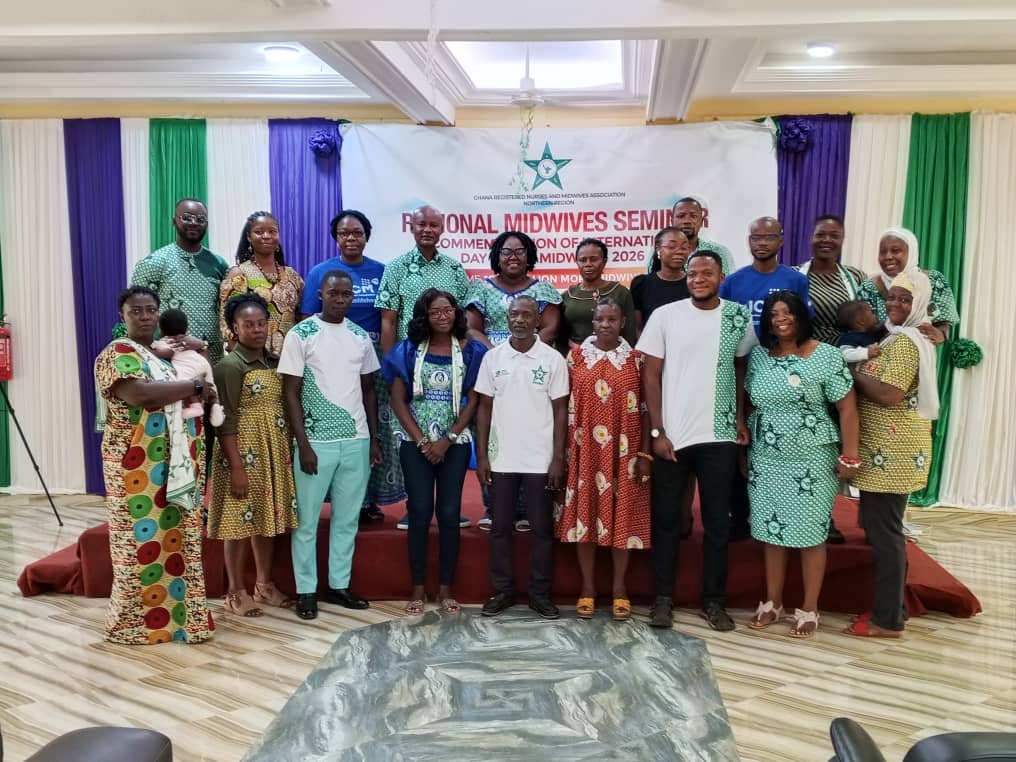
Midwives from the Northern, Savannah, and North East regions were celebrated in Tamale during the Ghana Registered Nurses and Midwives Association’s regional observance of the International Day of the Midwife.
The event, held under the global theme “One Million More Midwives,” gathered health officials, midwives, and stakeholders to reflect on the pivotal role midwives play in reducing maternal and infant mortality rates.
Speaking at the ceremony, Alhaji Ahasan Abukari, Regional Chairman of the Ghana Registered Nurses and Midwives Association for the Northern Region, praised midwives as a vital workforce often serving in areas where other health personnel are absent.
Midwives can be found everywhere—whether in urban centers or the remotest parts of the region, he said.
He acknowledged that while midwives continue to save lives daily, they face numerous challenges, including inadequate tools, poor working conditions, and stark disparities between urban and rural healthcare facilities.
Abukari called on the government to address these issues by introducing rural incentives and providing essential equipment.
If these tools and better working conditions are put in place—such as rural allowances—it will motivate more midwives to serve in underserved areas because our rural communities also deserve quality healthcare, he emphasized.
Echoing this sentiment, Ms. Rebecca Mathew, Acting Director of Nursing and Midwifery Services at Tamale Teaching Hospital, highlighted the importance of empowering midwives to further reduce maternal deaths.
Citing WHO data from 2023, she noted that a woman dies every two minutes globally due to pregnancy or childbirth complications.
Empowering midwives can significantly contribute to reducing maternal mortality, Mathew stated.
She urged policymakers and stakeholders to invest in midwife training, logistics, and human resource development, particularly in rural communities and urban slums where services are most needed.
Mathew emphasized that midwives are integral before, during, and after pregnancy, and that their morale, dignity, and working conditions directly impact the quality of care provided to mothers and newborns.
Our focus should be on access, education, and empowering these healthcare providers—dignifying their work and ensuring they have the necessary resources, she said.
Both speakers stressed that improving the number and conditions of midwives is essential to making obstetric care accessible and preventing maternal and infant deaths across the region.
During the event, Hon. Abdulai Imoro Gong, Municipal Chief Executive for Sagnarigu, highlighted the critical role midwives play at the most vulnerable moments in a mother’s life.
Their dedication, compassion, and skills deserve not only our praise but also our sustained support, he said.
He also emphasized that the theme for this year’s celebration, “One Million More Midwives,” is both powerful and urgent, calling on all stakeholders to act swiftly to bridge gaps in maternal healthcare and ensure every community has access to skilled midwives.
Participants expressed their appreciation for the program’s impact and called on the government to provide greater support to midwives across various healthcare facilities.
May 5th is observed globally as the International Day of the Midwife to recognize and celebrate the vital contributions of midwives to maternal and newborn health.
By: Mahamudu Musah